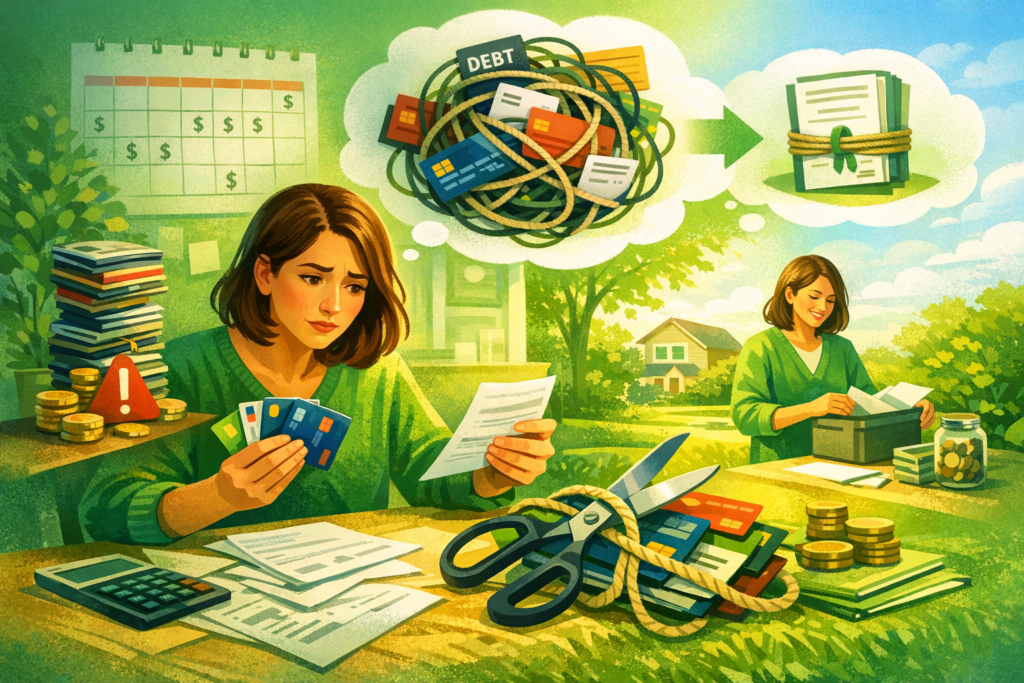
If you’ve been noticing credit card balances creeping up, minimum payments stretching longer than you expected, or your day-to-day spending starting to feel like it depends on borrowing, you’re not alone—and you’re not stuck. The first move is recognizing the early danger signals clearly enough that you can act before the problem locks into place. Then, if consolidation makes sense for your situation, you can use it as a tool to simplify repayment and reduce stress—without falling into new traps.
The goal isn’t to “fix everything” overnight. It’s to create a plan you can follow, reduce the amount of interest you pay over time, and stop patterns that keep debt growing.
1. Eight warning signs your budget is losing to your balances
Debt problems often start quietly. In many cases, the signs are behavioral: what you do with credit when cash gets tight. When several of these show up at once, it’s a signal to pause and reassess immediately.
Common danger signals include:
- Credit spending rises while income is flat or falling, meaning ordinary expenses are being charged instead of paid from available cash.
- You can only afford the minimum payment, which typically prolongs debt and increases the total interest you pay.
- You borrow on one card to pay another, a pattern that can hide the real issue while interest and fees accumulate.
- You keep many active cards (often five or more), which makes it easier to overspend and harder to track balances.
- Everyday purchases become “emergencies”, shifting routine living costs onto credit.
- You work extra hours mainly to cover payments, suggesting income and spending are out of alignment for the long term.
- Cards are near limits across multiple accounts, which signals income isn’t keeping up and can hurt future borrowing options.
- You use credit to cover gambling losses, a high-risk cycle that often requires outside support.
If several of these are happening, treat it like an early warning system—not a personal failure. The main job now is to stop the bleeding and rebuild clarity around what’s driving the shortfall.
2. Make a concrete plan: assess, budget, and prioritize without guessing
Before you consolidate or change anything else, you need a clear picture of what you owe and what your monthly reality looks like. That means moving from “I think it’s bad” to “here’s the full list.”
Start by assessing your current financial situation:
- List each debt (credit cards, loans, overdrafts), including balances, minimum payments, and interest rates.
- Record monthly income and essential expenses.
- Note irregular or seasonal costs so your plan isn’t based on wishful thinking.
Next, build a budget and repayment roadmap. A workable budget doesn’t just cover necessities—it also assigns a target amount to debt each month. From there, create a simple timeline that shows which debts you’ll tackle first and when you expect to see progress.
As you build the roadmap, reduce uncertainty by focusing on actions that directly improve cash flow: cut discretionary spending, track regular expenses (like groceries, utilities, and transport), and prioritize paying more than the minimum when feasible.
3. Consolidation can help—if you choose the right method and read the terms
Debt consolidation can simplify repayment by combining multiple balances into a single loan or repayment plan, sometimes lowering interest charges or monthly costs. But it’s not automatically beneficial. The key question is whether the new arrangement makes your payments more manageable without turning the debt into a longer, more expensive runway.
There are different ways to consolidate, including personal loans, tailored consolidation programs, and balance transfer approaches. If you use consolidation, make sure you’re comparing offers on the details that determine total cost and paydown speed.
Balance transfer cards: what to look for and what to avoid
A balance transfer credit card can move existing credit card balances onto one card—often supported by a promotional period such as 0% introductory APR for a limited number of months. The advantage is time: a lower (or temporarily zero) interest rate can help you pay down principal instead of mainly feeding interest.
When comparing balance transfer offers, focus on the terms that affect how much you’ll pay:
- Introductory APR and length: prioritize a low or 0% rate and the longest promo period that matches your payoff timeline.
- Balance transfer fee: if fees apply, a no-fee option is preferable when available.
- Transfer limits: confirm how much you can transfer and whether any balances are excluded.
- Ongoing APR after the promo ends and the purchase APR if you use the card for new spending.
- Annual fee: weigh any fee against the savings from the promo rate.
- Rewards details: check whether rewards apply to transferred balances and how they affect your net cost.
- Eligibility and credit limit: make sure the card limit can cover what you plan to consolidate.
Also read the fine print for clauses that can change the deal. Pay close attention to the balance transfer fee and how it’s calculated, when the promo period begins, whether new purchases accrue interest immediately, and how late payments can trigger penalty APR or end the promotional rate. Know how payments are applied when balances have different APRs.
4. Use consolidation like a repayment tool, not a fresh start for overspending
Consolidation only works when your behavior matches the plan. That’s why the most practical advice is also the most disciplined: reduce new charges, protect your promo terms, and stay focused on finishing the payoff before promotional windows expire.
To use a balance transfer card effectively:
- Avoid new purchases on the balance transfer card unless the terms clearly support it—new spending can carry a higher APR and complicate repayment.
- Make at least the minimum payment on time to help avoid losing the promotional rate.
- Create a repayment plan that targets paying off the transferred balance before the intro period ends.
- If you consider moving balances again when promos end, remember that it may involve new applications and can affect your credit history.
If the problem includes patterns like working extra hours mainly to service credit bills, or using credit for gambling losses, treat those as urgent signals that your plan needs more support than “another card.” In cases where progress stalls, contacting a reputable credit counselor or financial advisor can help you evaluate whether consolidation is appropriate and what alternatives might fit better.
With early action, a clear budget, and consolidation used carefully within strict repayment discipline, you can turn a growing balance into a manageable plan—and bring stress down because you’ll finally know what comes next each month.