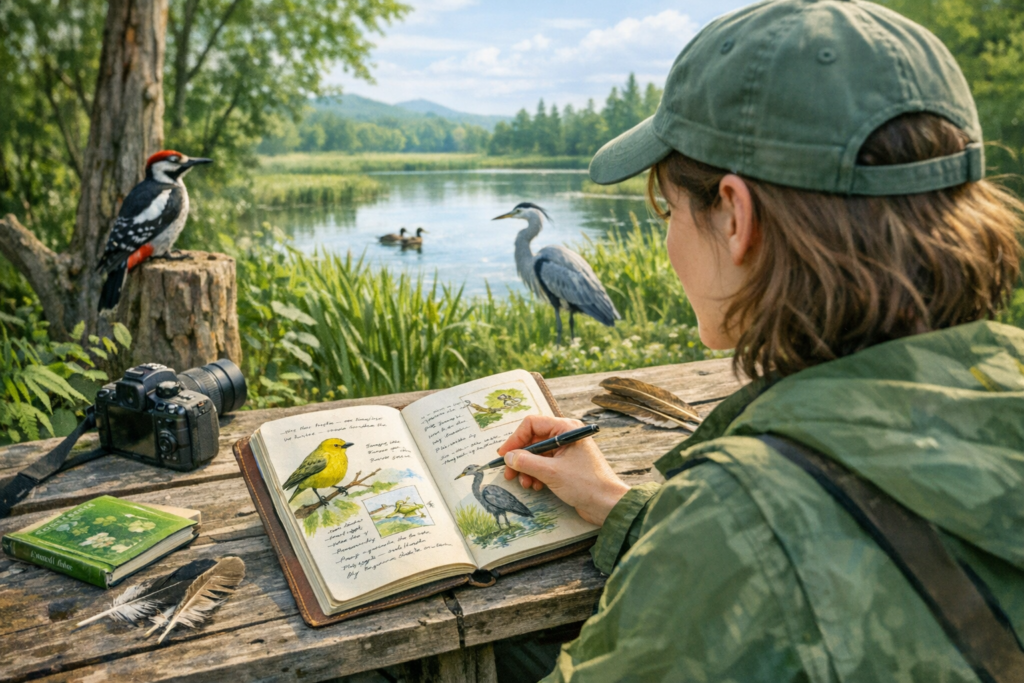
If you’ve ever thought, “I wish I’d written that down,” you already know why bird watching journals matter. Memories fade, weather and locations blur, and small details—the birds you saw, the people you met, the conditions that shaped the outing—can slip away unless you capture them.
A good journal doesn’t just store pages. It preserves the story of each trip, helps you remember what worked for future visits, and leaves you with something you can look back on for years.
1. Why journaling turns birding moments into lasting records
Bird watching is a welcome break from routine, and it’s also a fast-moving experience. You spot something interesting, notice the setting, share the moment with others, and then—before you realize it—time has passed. Writing down what you observed creates a dependable record of your outings and the details you might otherwise forget.
Even if your memories are vivid, they tend to lose precision over time. A journal helps you keep the specifics: where you were, what the weather was doing, who you went with, and which birds you sighted. That’s how a day in the field becomes something you can revisit later, not just something you remember vaguely.
Journals also make reflection easier. When you look back, you’re not only recalling birds—you’re recalling the trip itself: the atmosphere, the people, and the moments that made it meaningful.
2. Design a journal that’s practical in the field
A bird watching journal should be easy to carry and comfortable to use when you’re outside. If it’s too bulky or awkward, you’ll avoid using it, and the whole point of journaling is to catch details while they’re fresh.
Look for a setup that balances practicality with room for notes. A compact format makes it manageable on trips, and a protective cover helps guard against rain and spills. Just as important, the pages should include blank areas so you can write freely, rather than forcing your observations into an overly rigid template.
To make recording smoother, consider adding cue spaces—small prompts that nudge you to write down the key information without having to pause and think from scratch.
3. Use cues and prompts to capture the information that matters
One of the biggest challenges in keeping a journal is remembering what to write down right away. Cue prompts reduce that friction and help you build consistent records across outings.
Common cues to include focus on people, place, and conditions, as well as the birds you actually sighted. For example, you can record:
- Who you went birding with
- Where you stayed and whether you enjoyed it
- People you met and contact information
- Geographic and weather conditions
- The birds you sighted and what you add to your life list
With cues like these, your journal becomes more than a collection of notes—it becomes an organized record you can understand at a glance, even years later.
4. Write during the outing, then refresh your notes soon after
For the best results, don’t rely only on later memory. When possible, write in the journal during the outing while you’re still there and the details are available to you. Each sighting can bring new information, and capturing it as it happens helps you avoid missing the small, useful parts of the story.
After you head home, take a second pass shortly after. That follow-up helps you add anything you remembered later and refine observations while they’re still fresh. It’s also a great way to record backyard sightings—because even when you’re not traveling, the experience can be just as worth preserving.
Over time, this habit pays off. A well-kept journal can provide contact information for other bird watchers and locals you meet, enough detail to guide future visits, meaningful memories to revisit years later, and useful information you can share with family members.