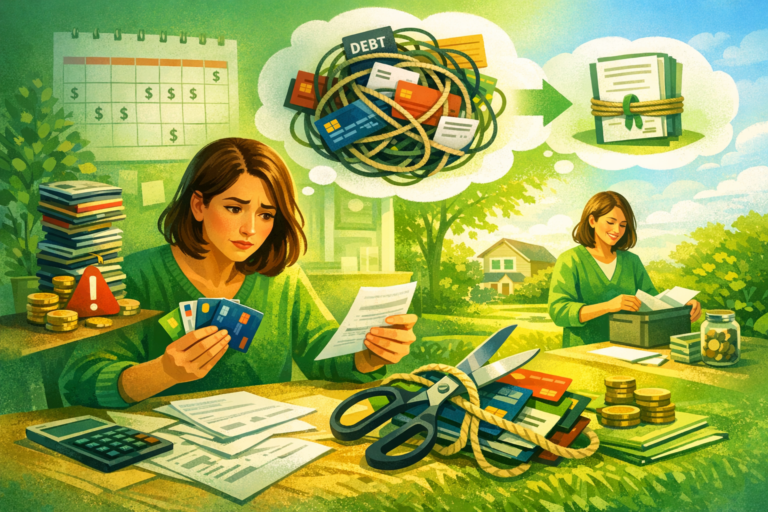
If you’re trying to get out of debt, your biggest advantage is clarity: you need to know what you owe, what it costs you each month, and what you can realistically pay. From there, the best next step is usually a mix of spending control, a budget you can follow, and a repayment plan that keeps you moving.
When balances feel unmanageable, consolidation may help by simplifying payments and reducing interest. But consolidation only works when you understand the terms, compare total costs, and choose an approach that fits your credit and your discipline level—not just what looks good on paper.
1. Start with the numbers, then build a budget that supports repayment
Before you change anything, gather your monthly statements and create a straightforward list of your debts, interest rates, minimum payments, and due dates. That snapshot turns debt from a vague stress into a set of decisions you can actually work through.
Next, build a basic budget that covers necessities first—housing, utilities, groceries, and transportation—then carve out a clear amount for debt repayment. Treat debt payment as a real line item, not something you “hope” you can afford later.
A budget also helps you avoid accidentally creating new debt while you’re trying to pay down old balances. When you can see how discretionary spending affects your repayment progress, cutting back becomes less like punishment and more like strategy.
2. Lower spending friction: cut discretionary costs and limit credit card damage
Small, regular savings often matter more than people expect. Focus on recurring or avoidable spending: energy use, unused subscriptions, and everyday habits like packing lunch instead of eating out. The goal isn’t perfection—it’s freeing up money you can send toward repayment.
Credit cards deserve special attention because they can keep debt stuck in a cycle. Try to avoid purchases you can’t pay off by the statement date, since carrying a balance and paying only the minimum increases interest costs and slows progress.
If credit cards are a temptation, reduce the number of cards you rely on. Keeping one or two low-interest cards for emergencies can help curb impulse spending and make it easier to track payments. If you consider closing accounts, remember that credit score impacts vary—choose what fits your situation.
3. Choose a payoff plan you can stick with: snowball or avalanche
Paying off debt is easier when you have a method that matches your motivation. One common option is the “debt snowball,” where you focus on the smallest balance first to build momentum. Another is the “debt avalanche,” where you target the highest interest rate first to reduce total interest paid.
Regardless of which approach you pick, keep minimum payments current on all other debts while you put as much as you can toward the one you’re targeting. When that balance is paid off, you roll the payment amount into the next debt so your progress compounds.
The key is consistency. Track progress, celebrate milestones, and adjust your budget when your circumstances change—because the plan has to stay realistic as life happens.
4. Use consolidation strategically: balance transfers, counseling, and personal loans
When multiple debts compete for your attention, consolidation can simplify payments. A balance transfer card, for example, can move existing credit card balances onto a single card—often paired with a low or 0% introductory rate—so you can focus on paying down principal during the promotional period.
If you go the balance transfer route, compare terms that affect your total cost: transfer fees, the length of the introductory rate, the post-intro APR, available credit limits, and any timing rules or penalties. Also watch how purchases are handled—avoid using the same card for new spending unless you understand how it will be treated during the intro period.
Another consolidation path is working with a debt consolidation agency (credit counseling). Counselors may negotiate with creditors to try to lower interest rates, reduce monthly payments, or arrange a single payment plan. You should ask for a clear fee schedule upfront, confirm accreditation and reputation, and understand how the arrangement could affect credit reporting and account status.
Personal loans can also consolidate debt by paying off high-interest balances, leaving you with one fixed monthly payment. The upside is potential interest savings and a clear payoff timeline. The tradeoff is that unsecured personal loans usually require steady income and a credit profile that meets lender standards, and you should shop multiple lenders for rates, fees, and loan terms—including prepayment penalties if any.
5. Compare options using total cost, credit impact, and repayment discipline
Consolidation isn’t automatically “better.” Before committing, gather your current statements again and calculate total outstanding balances and the interest rates you’re paying. Then evaluate whether a new plan meaningfully reduces monthly payments and total interest, not just whether it simplifies the number of payments.
Compare total costs across options—interest, fees, and any penalties for early repayment. Also consider the impact on your credit score. Some consolidation plans and loans can affect credit in both the short and long term, and steps like closing paid-off accounts may change credit utilization and credit history length.
Finally, be honest about discipline. A structured plan with counseling can help some people stay on track. Others may prefer the predictability of a fixed loan payment. If you’re unsure, work with a reputable credit counselor or financial advisor to review the options that fit your situation.