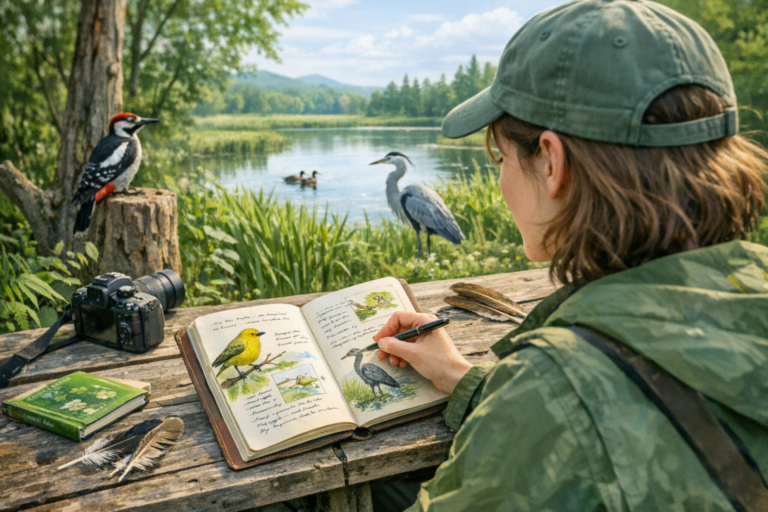
If you love bird watching but want a little more excitement than a quiet walk with binoculars, bird watching competitions (often called “big days” or “bird days”) offer a simple challenge: see and record the most species in a set amount of time.
These one- or two-day events happen in specific geographic areas chosen for their variety. Instead of focusing on a single bird, the emphasis is on diversity—turning exploration into friendly competition.
1. How bird watching competitions actually work
Most bird watching competitions are built around a clear, limited time window and a shared goal: tally the most species within the allotted period. Participants may work as individuals, but teams are common, and team members coordinate their observations across the day or over a weekend.
Scoring typically relies on self-reported tallies. In many formats, organizers use an honor system to keep the vibe informal. That design matters: it helps the event feel welcoming to newcomers and reduces the “gotcha” feeling that can sometimes come with other kinds of contests.
Organizers also tend to pick locations that offer a rich mix of species. Practically, that means participants aren’t just walking around hoping to see something interesting—they’re heading to habitats known for variety, which increases the chances of finding birds that might not show up on a more routine outing.
2. Why join: curiosity, variety, and community
The most rewarding part of these events is often what they push you to do. Because the goal is species diversity, you’re encouraged to explore habitats you might not normally visit, and you’ll likely end up recording unfamiliar birds along the way.
There’s also a social side. Bird watching competitions bring together people who care about the same details you do—identifying species, sharing sightings, and comparing notes. Even when the competition aspect is central, the day can easily become the start of new birding opportunities in different areas.
If you’ve ever wanted a reason to try a new route, check out a different kind of habitat, or meet other enthusiasts who are as curious as you are, a competition structure can make that easier than trying to motivate yourself from scratch.
3. Famous events and what to expect
One widely known example is the World Series of Bird Watching, organized by the New Jersey Audubon Society. Teams form for the competition, which is held in early May each year.
In historical coverage, you can also find references to specific years and dates (such as May 13, 2006), along with the kind of playful team energy that shows up in the event culture. If you like friendly vibes alongside shared goals, that kind of atmosphere can be a big part of why these competitions stick in people’s memories.
Even if you’re not tracking a single “official” event, the structure is consistent across many locations: a time window, a focus on tallying species, and a place chosen to maximize the chance of seeing more variety.
4. Bird days as a family entry point
Bird watching competitions aren’t only for seasoned birders. Big Day-style events can be a strong, approachable entry point for families, especially when children are curious but still learning how to focus and observe.
A structured event gives kids a clear mission, while still keeping the experience grounded in something tangible—spotting birds and noticing what’s around them. That blend of structure and wonder can help turn a one-time outing into an ongoing interest.
If you’re considering how to introduce younger family members to bird watching, these events can offer a fun way to do it: you’re not asking them to “be a bird expert,” you’re inviting them to participate in the hunt for variety.