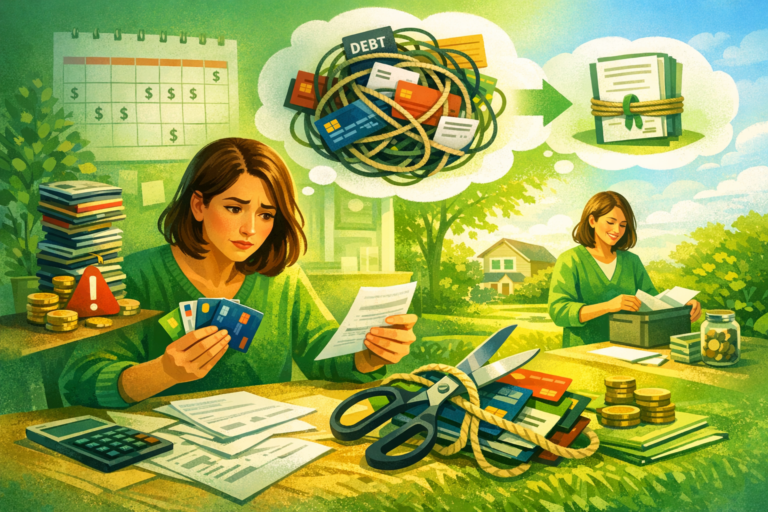
When debt starts to feel unmanageable, it’s tempting to jump straight to bankruptcy. But before you make a permanent move, it helps to slow down and rebuild your options around one goal: improving your cash flow while protecting your long-term financial picture. The right path depends on what’s driving the pressure—high interest, too many payment dates, weak budgets, or a mismatch between debt and income.
Debt relief isn’t one-size-fits-all. Sometimes the best next step is tightening spending and stabilizing payments. Other times, you may need professional help to compare structured alternatives—like credit counseling, debt-management plans, or consolidating certain debts such as federal student loans.
1. Start with a complete debt-and-budget inventory
Most “wrong turn” decisions happen because people don’t have a clear picture of what they owe and where their money is going. Before choosing bankruptcy or any other strategy, document every debt and every monthly expense in one place so you can make decisions based on reality, not stress.
Include secured debts (like a mortgage or auto loans) with balances, monthly payments, and interest rates. Then list unsecured debts (such as credit cards and personal loans) with balances and interest rates for each account.
Finally, separate fixed expenses (utilities, insurance, phone, groceries, transportation) from variable and discretionary spending (dining out, entertainment, memberships, impulse purchases). This split matters because it shows what you can cut quickly versus what’s harder to change.
2. Reduce monthly pressure and align spending with a plan
Once your numbers are visible, you can target the easiest wins. Eliminating nonessential expenses isn’t about punishment—it’s about freeing cash for payments, reducing interest buildup, and creating a buffer so you don’t keep borrowing to cover the basics.
Create a budget that includes specific spending limits and short-term goals, then involve your household if other people contribute to expenses or decisions. When everyone understands the situation, it’s easier to coordinate bills and stick to the plan.
If you can’t reduce expenses enough, consider the other side of the equation: income. Even a temporary boost—part-time work, freelancing, or selling unused items—can create breathing room and help you direct extra payments toward the highest-interest balances first.
3. Use assets and credit counseling carefully—avoid quick-fix traps
In some situations, selling or leveraging assets can help reduce high-interest debt. If you have items you can live without, start with practical options like garage sales, online marketplaces, or consignment. If you’re considering home equity or refinancing, move cautiously and understand the risks and costs before committing.
Be especially careful about decisions that can create new long-term problems. Hastily tapping retirement accounts or making secured borrowing decisions without full awareness of consequences can backfire.
Professional guidance can clarify whether alternatives to bankruptcy make sense. Look for reputable credit counseling and ask what options are available, such as a debt-management plan (DMP). Demand clarity before enrolling: a written budget, a clear explanation of any proposed plan, and details about fees and timelines.
Debt consolidation can be helpful when done legitimately, but shady companies exist. Watch for warning signs like unusually low quoted payments without a transparent written breakdown, requirements to include every debt account automatically, large nonrefundable upfront fees, and pressure to add unrelated services such as debt settlement or credit repair. Also be cautious about sharing sensitive personal information like Social Security numbers or full account numbers before verifying legitimacy.
4. If student loan consolidation is part of the problem, compare trade-offs
For borrowers managing multiple federal student loans, consolidation can simplify repayment by combining eligible federal loans into a single loan with one monthly payment. The purpose is to reduce complexity—fewer due dates, fewer servicers, and one place to manage your account.
Consolidation may also affect repayment structure. It can sometimes allow flexible repayment terms, including options that may make repayment more manageable. However, extending repayment time can lower monthly payments while increasing total interest paid, so the monthly relief isn’t always the end of the story.
Before consolidating government student loans, review key details that can change your outcomes: interest rate structure (including whether it can be fixed or variable), whether the consolidation covers the entire outstanding balance, how the new loan term changes total repayment, and whether origination fees or prepayment penalties apply.
Equally important is the impact on borrower benefits and progress toward any federal programs. Consolidation can change or eliminate benefits such as interest subsidies or incentives, and it can also lead to changes in servicers and servicing support. If you’re considering refinancing instead of federal consolidation (which replaces federal loans with a private loan), understand that you may lose federal protections and benefits.
5. When bankruptcy still may be necessary, make it an informed decision
After inventorying debts, cutting nonessential spending, coordinating with your household, exploring asset options, and seeking professional guidance, bankruptcy may still be the right choice for certain circumstances. If unsecured debt remains unmanageable despite realistic alternatives, or if creditor actions are difficult to resolve, it’s worth consulting a qualified bankruptcy attorney or a nonprofit credit counselor.
Taking the time to document your debts and explore structured options doesn’t guarantee you’ll avoid bankruptcy—but it can prevent impulsive decisions and give you clearer control over your financial next steps.