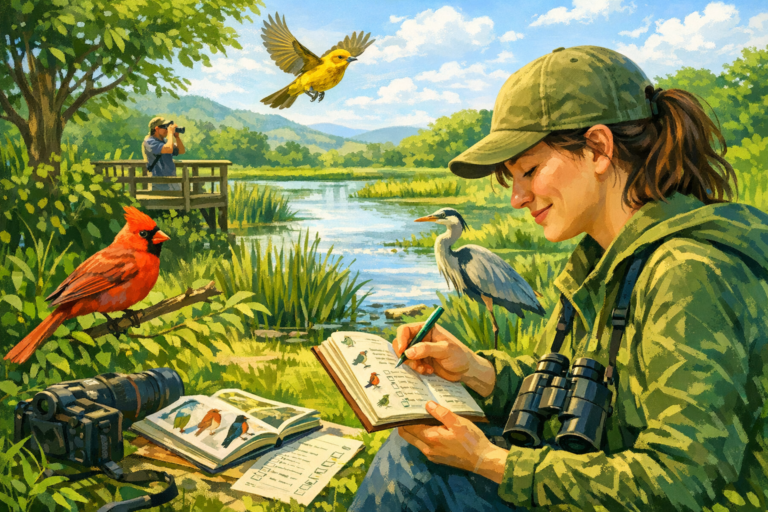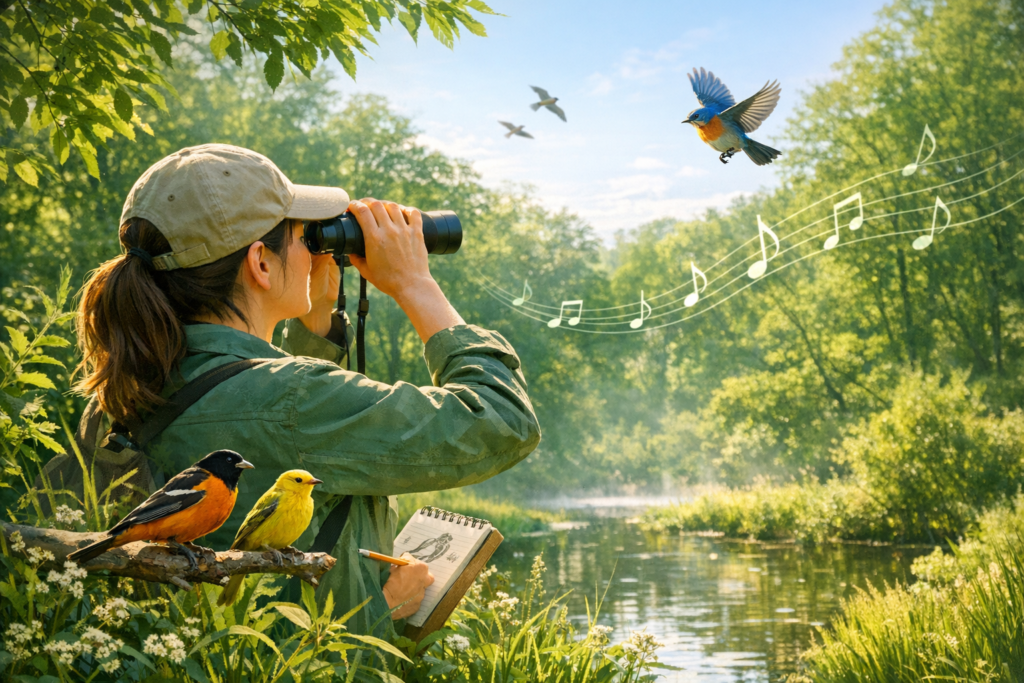
Bird watching (often called birding) is a hands-on way to slow down and connect with nature. Instead of just looking, birding encourages you to pay attention to bird sounds too—listening is part of the experience, not an optional extra. If you’ve been curious but don’t know where to begin, start simple: observe what’s already around you, especially in the early morning when birds are actively searching for food.
Over time, you can turn casual sightings into real knowledge—using the right tools, learning from guides, and sharing the hobby with others who enjoy the same quiet focus.
1. Start where the birds already are
Most birders begin in their own backyard. It’s a practical first step because you can watch regularly without needing to plan trips every time. Bird feeding can also support local wildlife and give you steady opportunities to observe behavior up close.
If you’re trying to attract more birds, think in terms of food types: seeds, nectar, suet, and fruit can draw different species depending on what’s available locally. Pay attention to what shows up and when—patterns often become clearer as you spend more time watching.
Timing matters. Early morning is often productive, because many birds are actively foraging. When you build your routine around those hours, you’ll usually see more—and you’ll learn faster.
2. Use binoculars and field guides that fit your needs
Once you start looking more seriously, basic equipment helps you identify what you’re seeing. Many beginners use binoculars, a notebook, and at least one field guide.
Binoculars are commonly described with numbers such as 8×32. The first number is magnification, and the second is the diameter of the objective lenses in millimeters. For most birding, many observers find 7x or 8x to be a comfortable starting point.
Field guides are your main learning tool. They describe birds and may cover a country, a region, or a specific habitat. A good strategy is to choose a guide that matches the place you’ll actually be observing, so identification feels grounded instead of abstract.
Keep a blank notebook handy as well. Recording what you notice—time of day, behavior, and rough descriptions—makes later learning easier and more satisfying.
3. Learn by observing, not by interfering
As you expand beyond backyard birding, you may want to visit places with higher bird activity, such as bird sanctuaries or national parks. Trips can be exciting, especially when you’re hoping to see lots of species in a single area.
Even when the goal is a rare sighting, good birding has a clear boundary: observe birds without harming them. Respecting wildlife is part of the hobby’s spirit, and it also helps protect the experience for everyone who comes after you.
You may also notice different styles of birding. Some people travel long distances specifically to see rare birds and are sometimes called twitchers—a term that’s been used in Britain and parts of Europe. Whether you’re casual or travel-focused, staying mindful of the birds themselves keeps the experience meaningful.
4. Build knowledge with community and local resources
Birding grows faster when you’re not doing it alone. Joining a local birding club can be especially helpful. Clubs often organize field trips, screen films about good birding destinations, and may participate in local environmental projects.
Community also gives you shared momentum. You can learn from other birders’ routes, find out what locations are currently productive, and feel more confident identifying birds when you can compare notes.
If you prefer quiet study between outings, use your local library. Books on birds and ornithology can deepen your understanding and help you connect what you see in the field with how birds live and behave.