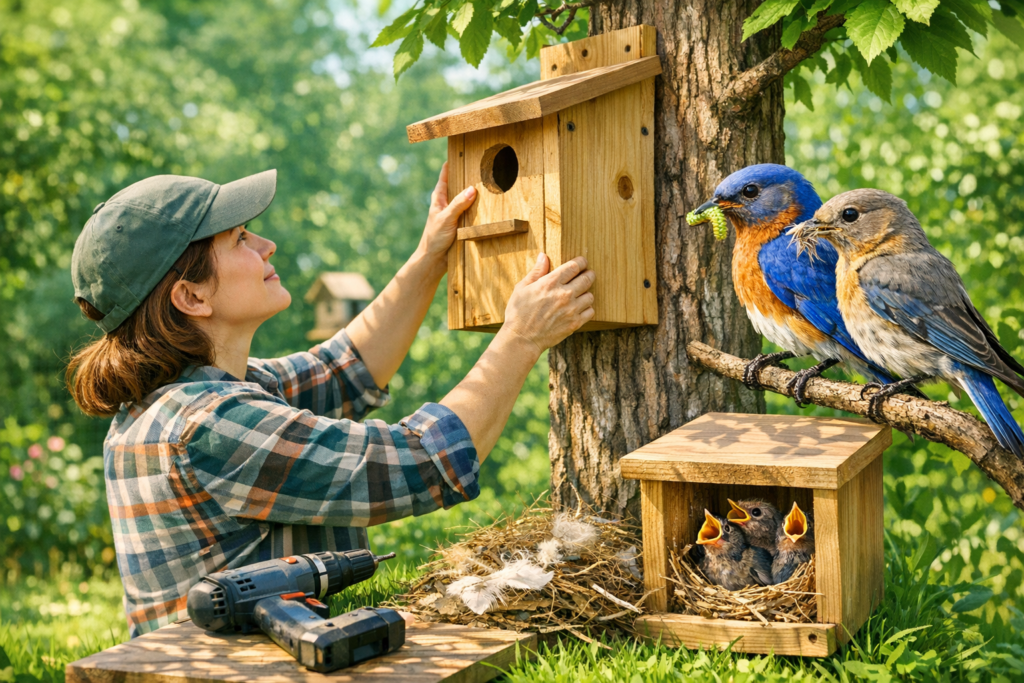
If you want to offer local birds a helpful breeding spot, a nest box can be a practical way to provide shelter during the time when eggs are incubating and young birds are being raised. The key is to remember that there isn’t one “perfect” design—birds vary by species, and they’re selective about where their nests are protected, how exposed they are to predators, and how comfortable the environment stays for developing eggs and nestlings.
Just as important as the initial build is what you do afterward. Proper placement and end-of-season cleaning help reduce the chance of parasites and protect birds from lingering chemical residues. With a few grounded choices, your nest box can become a safe, reliable option for nesting birds.
1. Start with what birds need: safe, sheltered, and species-appropriate
A bird’s nest is the environment where eggs develop during the breeding season, so the box you provide should focus on safety and comfort. In nature, nests take many forms: some birds build detailed structures from materials like sticks and twigs, while others lay eggs in natural holes or similar sites. That variety matters, because different species also prefer different nest sizes, shapes, and nesting locations.
Because of that, the goal with a nest box isn’t to copy one design for every bird—it’s to adapt the box to match the needs of the species you’re trying to support. In general, birds look for a secure place that shields eggs and chicks from extreme temperatures and from predators. A strong nest box concept is built around protection from weather and danger, not around decorative details.
One useful way to think about design is to focus on the nesting style birds already use. For example, woodpeckers often nest directly in tree trunks or branches. That kind of natural preference is a reminder that placement and overall shelter matter as much as the box itself.
2. Placement and protection: reduce harsh exposure and predator risk
Even the best-built nest box won’t be helpful if it’s set where birds feel exposed. Placement is crucial for protecting nests from extreme temperatures and predators, since a nest site can determine whether the young can develop safely through the breeding period.
When positioning a nest box, aim to minimize exposure to both harsh weather and likely predators. That means thinking about how sheltered the location is and whether the surroundings give birds the cover they need while incubating and rearing their young.
Because birds vary in their preferred nest sizes and shapes, placement should also be consistent with the kind of nesting the target species typically chooses. The broader principle remains the same: help create a stable, protected environment where incubation and early rearing can happen with less risk.
3. Cleaning after breeding: protect the next season with hot water only
After the breeding season ends, your nest box needs attention. Removing the box from its location and cleaning it helps remove parasites that may have accumulated during use. This step supports healthier conditions for birds returning in the future.
For cleaning, use hot water to clean the interior. Avoid chemical cleaners. Residues can linger in the nest area and may harm birds, which is exactly the risk you want to eliminate when you’re preparing the box for the next breeding cycle.
Cleaning timing matters too. Nest cleaning should be done between October and November, after the breeding period has passed. That schedule aligns with the idea that the box should be made ready for the next round of nesting without introducing harmful materials during active breeding.
4. Key takeaways for a safer nest box routine
If you want a nest box that supports birds instead of complicating their breeding, keep your decisions simple and focused on safety. Birds depend on protected, comfortable nesting environments during incubation and rearing, and your choices around location, materials, and cleaning can make the difference.
- Nests vary by species in size, shape, and materials, so your box should be adaptable to the birds you’re targeting.
- Place the nest box to minimize exposure to predators and harsh weather.
- Clean the interior with hot water and avoid chemical cleaners to prevent lingering residues.
- Plan cleaning for late autumn, typically October to November, after breeding has ended.